Ct Guided Procedures
Ct Guided Procedures
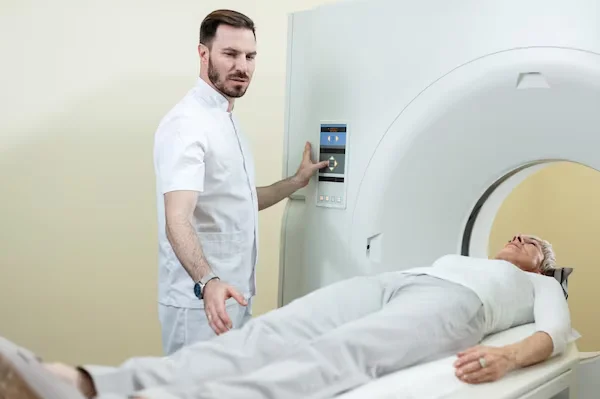
CT Guided Procedures are advanced minimally invasive diagnostic and therapeutic techniques used in pulmonology and respiratory medicine to accurately identify and treat diseases affecting the lungs, pleura, chest cavity, and surrounding structures. These procedures use real-time Computed Tomography (CT) imaging to precisely guide needles or instruments to the targeted abnormal area within the chest, ensuring higher accuracy, safety, and better diagnostic outcomes.
Dr. Gurmeet Singh Chabbra, a highly experienced Pulmonologist and Sleep Medicine Specialist with more than 22 years of expertise, specializes in advanced CT-guided pulmonary procedures for the diagnosis and management of complex respiratory diseases. Having worked with renowned institutions such as Marengo Asia Hospital, Fortis Escorts Hospital, Indraprastha Apollo Hospital, AIIMS Delhi, and LRS Institute of TB & Respiratory Diseases, Dr. Chabbra is recognized for his expertise in handling complicated lung disorders using evidence-based and modern medical technologies.
With extensive experience in Bronchoscopy, EBUS-TBNA, Thoracoscopy, TBLB Biopsy, Pleural procedures, and CT-guided interventions, Dr. Chabbra provides comprehensive respiratory care focused on accurate diagnosis, early disease detection, and minimally invasive treatment options for patients.
What are CT Guided Procedures?
CT Guided Procedures involve the use of high-resolution CT imaging to guide specialized needles or instruments to abnormal areas inside the lungs or chest cavity. These procedures help doctors obtain tissue samples, drain fluid collections, or perform targeted therapeutic interventions with exceptional precision.
CT guidance allows pulmonologists to safely access deep or difficult-to-reach lung lesions that may not be easily approachable through conventional methods.
These procedures are commonly performed for:
- Lung nodules
- Lung masses
- Pleural diseases
- Mediastinal lesions
- Pulmonary infections
- Suspected lung cancer
- Fluid collections inside the chest
CT-guided interventions are highly effective, less invasive, and often reduce the need for open surgical procedures.
Common CT Guided Pulmonary Procedures
CT Guided Lung Biopsy
A minimally invasive procedure used to collect tissue samples from abnormal lung lesions or nodules for accurate diagnosis.
CT Guided FNAC (Fine Needle Aspiration Cytology)
A thin needle is inserted into the lesion to collect cells for microscopic examination.
CT Guided Pleural Aspiration
Used to remove fluid from the pleural space for diagnostic analysis or symptom relief.
CT Guided Drainage Procedures
Performed to drain abscesses, infected fluid collections, or pleural empyema from the chest cavity.
CT Guided Tumor Evaluation
Helps in identifying and confirming lung tumors or metastatic lesions.
CT Guided Mediastinal Sampling
Used for evaluating lymph nodes or abnormalities located in the mediastinum (central chest region).
Why are CT Guided Procedures Needed?
CT Guided Procedures are recommended when imaging studies reveal suspicious abnormalities that require detailed evaluation. These procedures help in:
- Diagnosing lung cancer
- Detecting infections such as tuberculosis or fungal disease
- Evaluating lung nodules or masses
- Diagnosing Interstitial Lung Diseases
- Identifying pleural diseases
- Confirming inflammatory or autoimmune lung conditions
- Planning appropriate treatment strategies
- Avoiding unnecessary major surgeries
Early and accurate diagnosis is essential for successful treatment outcomes in respiratory diseases.
Conditions Diagnosed Through CT Guided Procedures
Dr. Gurmeet Singh Chabbra performs CT-guided procedures for the diagnosis and management of various respiratory conditions, including:
- Lung Cancer
- Tuberculosis (TB)
- MDR/XDR Tuberculosis
- Interstitial Lung Diseases (ILD)
- Pleural Effusion
- Pulmonary Infections
- Lung Nodules
- Mediastinal Lymphadenopathy
- Chronic Lung Diseases
- Fungal Lung Infections
- Pleural Tumors
- Empyema
Benefits of CT Guided Procedures
High Accuracy
CT imaging provides precise localization of lung abnormalities for accurate diagnosis.
Minimally Invasive
Most procedures require only a small needle puncture, reducing pain and recovery time.
Faster Diagnosis
Allows early detection of serious respiratory diseases like lung cancer and tuberculosis.
Reduced Surgical Need
Many conditions can be diagnosed without open surgery.
Safer Procedure
Real-time imaging guidance minimizes damage to surrounding healthy tissues.
Quick Recovery
Most patients can return to normal activities within a short period.
How CT Guided Procedures are Performed
Pre-Procedure Evaluation
Before the procedure, the patient undergoes:
- Clinical examination
- CT scan review
- Blood investigations
- Oxygen level assessment
- Pulmonary evaluation
During the Procedure
- The patient is positioned according to the location of the lung lesion.
- Local anesthesia is administered to minimize discomfort.
- CT imaging is used to guide the needle precisely to the targeted area.
- Tissue or fluid samples are collected carefully.
- The procedure is continuously monitored through CT imaging.
Post-Procedure Monitoring
Patients are observed for a few hours to monitor breathing and detect rare complications such as pneumothorax (air leak).
Advanced Pulmonary Expertise by Dr. Gurmeet Singh Chabbra
Dr. Chabbra has extensive experience in advanced pulmonary and critical care procedures, including:
- CT Guided Lung Biopsy
- Bronchoscopy
- EBUS-TBNA
- Thoracoscopy
- TBLB Biopsy
- Pleural Procedures
- Respiratory Critical Care
- Sleep Disorder Management
- CPAP/BiPAP Therapy
His expertise enables accurate diagnosis and comprehensive management of complex respiratory disorders.
Conditions Requiring Immediate Pulmonary Evaluation
You should consult a pulmonologist if you experience:
- Persistent cough lasting several weeks
- Unexplained weight loss
- Blood in sputum
- Chronic chest pain
- Breathlessness
- Abnormal chest CT findings
- Recurrent lung infections
- Suspicious lung nodules
- Persistent fever with respiratory symptoms
Early evaluation can help detect serious conditions at an early and treatable stage.
Risks and Safety of CT Guided Procedures
CT Guided Procedures are generally safe when performed by experienced specialists. However, like any medical procedure, minor risks may include:
- Mild bleeding
- Temporary chest discomfort
- Pneumothorax (collapsed lung)
- Infection (rare)
- Mild coughing after biopsy
Dr. Gurmeet Singh Chabbra follows strict safety protocols and advanced imaging techniques to minimize risks and ensure patient safety.
Why Choose Dr. Gurmeet Singh Chabbra for CT Guided Procedures?
More Than 22 Years of Experience
Extensive expertise in Pulmonology, Respiratory Medicine, and Critical Care.
Advanced Diagnostic Skills
Highly experienced in CT-guided pulmonary procedures and minimally invasive respiratory interventions.
Association with Top Medical Institutions
Worked at:
- Marengo Asia Hospital
- Fortis Escorts Hospital
- Indraprastha Apollo Hospital
- AIIMS Delhi
- LRS Institute of TB & Respiratory Diseases
Specialized Respiratory Care
Expert management of:
- Lung Cancer
- Tuberculosis
- ILD
- Pleural Diseases
- COPD
- Chronic Asthma
- Sleep Disorders
Patient-Focused Treatment
Provides compassionate care with personalized treatment planning and long-term respiratory management.
Evidence-Based Medical Approach
Uses modern medical technologies and internationally accepted treatment protocols.
Frequently Asked Questions (FAQs)
1. What is a CT Guided Lung Biopsy?
It is a minimally invasive procedure in which CT imaging is used to guide a needle into a lung lesion to obtain tissue samples for diagnosis.
2. Are CT Guided Procedures painful?
Most procedures are performed under local anesthesia and cause minimal discomfort.
3. How long does a CT Guided Procedure take?
The procedure usually takes 30 to 60 minutes depending on the complexity and location of the lesion.
4. Is hospitalization required after the procedure?
Most patients are discharged the same day after observation unless additional care is required.
5. Why are CT Guided Procedures preferred?
They provide accurate diagnosis with minimal invasiveness, faster recovery, and lower complication rates.
6. Can CT Guided Procedures detect lung cancer?
Yes, these procedures are highly effective in diagnosing lung cancer and other chest abnormalities.
7. Are there any risks associated with CT Guided Lung Biopsy?
Minor risks include bleeding, temporary discomfort, or pneumothorax, but serious complications are uncommon.
8. When should I consult a pulmonologist for CT Guided evaluation?
You should seek evaluation if imaging shows suspicious lung nodules, masses, unexplained lung disease, or persistent respiratory symptoms.